

Concrete is not finished simply because the surface looks complete. Curing is the period after placement when the concrete continues to hydrate and develop, and it remains an important part of the construction sequence for slabs, walls and other concrete elements.
Curing is different from drying
Concrete gains strength through hydration, a chemical reaction that uses water within the cementitious system. Curing supports that process by helping manage moisture and temperature conditions after placement.
A surface that looks dry does not mean the concrete has completed its development. The early period after placement deserves its own attention in the project schedule.
Why early conditions matter
Wind, heat, low humidity, cold weather and direct exposure can change the conditions around newly placed concrete. The appropriate curing approach depends on the application, project requirements and weather at the time of the work.
That is one reason concrete scheduling should include more than the placement date itself.
Curing is part of slab planning
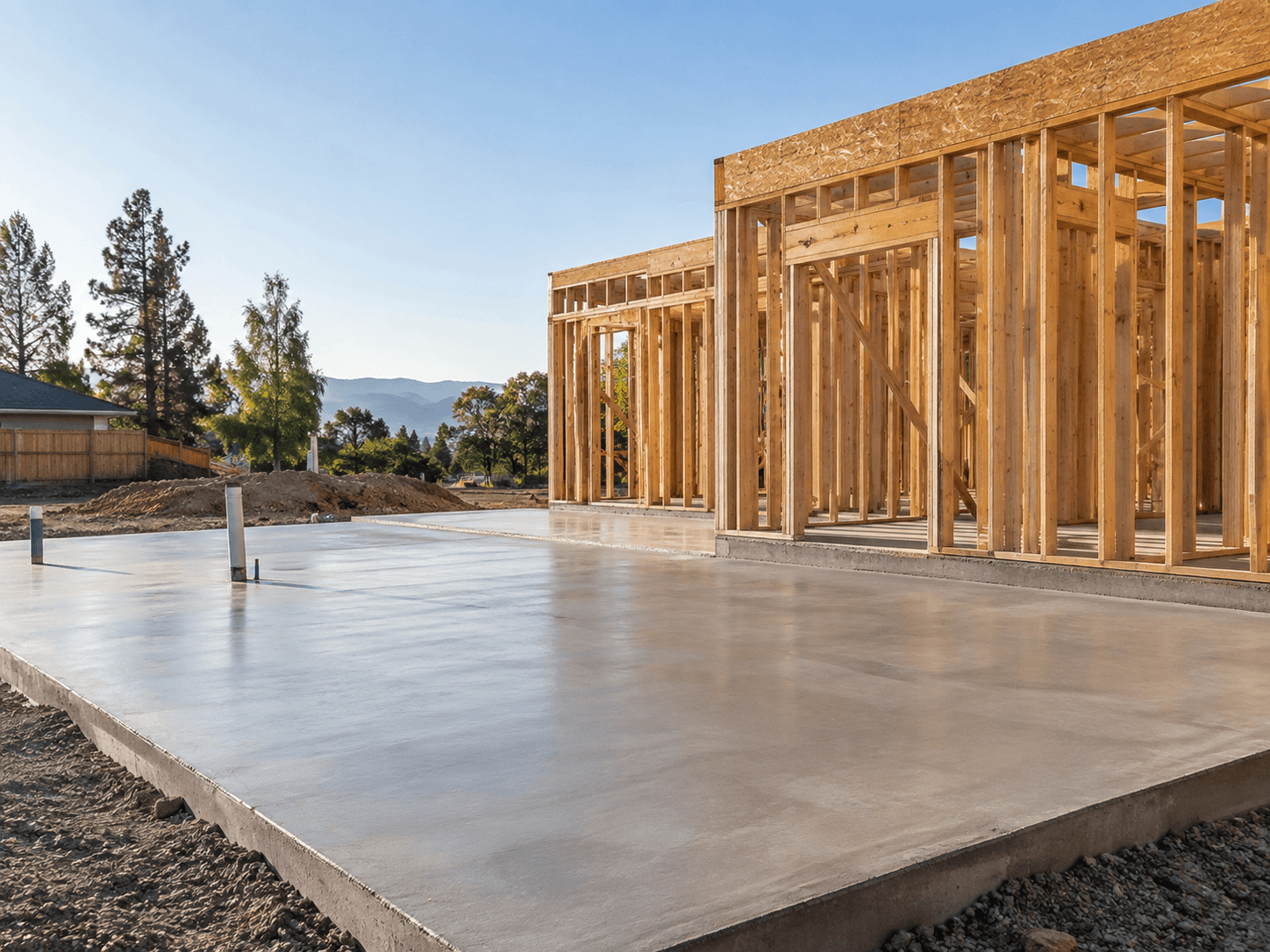
For slabs, finishing is followed by a period when the surface and concrete below continue developing. Construction traffic, loading and later finishes should be coordinated with the condition of the slab and the project requirements.
The same principle applies when a slab forms part of a larger residential build and other trades are waiting to enter the area.
Walls and foundations also continue developing
Poured walls remain part of the active foundation phase after placement. Form removal, drainage work, waterproofing, backfill and framing all need to fit the condition of the concrete and the planned sequence.
The timing between these activities is established for the actual project rather than assumed from the appearance of the wall surface.
Weather and protection affect the schedule
Cold or hot conditions can require additional planning around placement and the early curing period. Site access and protection from weather also matter when concrete work takes place during changing seasonal conditions.
A realistic schedule leaves room for those variables instead of treating every concrete project as if it progresses at the same rate.
The practical takeaway
When planning concrete work, include curing in the timeline from the beginning. Ask how the concrete phase connects to the next construction activity and avoid scheduling later work as though placement and completion happen at the same moment.